Feedback/questions? Let me know.
Alexander Graham Bell Box Telephone
1877
AGB magnetic transmitter
1876
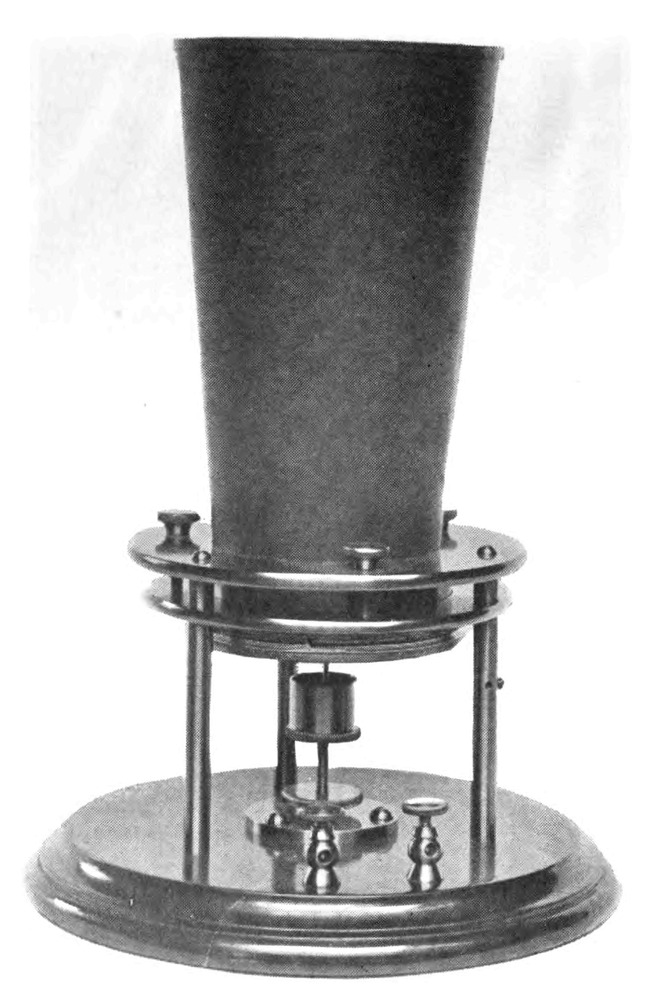
Bell liquid transmitter
Wikipedia
A water microphone or water transmitter is based on Ohm's law that current in a wire varies inversely with the resistance of the circuit. The sound waves from a human voice cause a diaphragm to vibrate, which causes a needle or rod to vibrate up and down in water that has been made conductive by a small amount of acid. As the needle or rod vibrates up and down in the water, the resistance of the water fluctuates, which causes an alternating current in the circuit. For this to work, the resistance of the water must vary substantially over the short distance the needle or rod vibrates. Acidulated water works well because only a small amount of acid is added. If one millimeter of acidulated water has a resistance of 100 ohms, two millimeters would have 200 ohms, which would produce enough alternating current to transmit audio signals in thousands of feet of wire. Mercury will not work because the resistance of one millimeter of mercury is less than a tenth of an ohm, and the vibration of a needle in mercury would produce a negligible alternating current.
×
‹
![]() ›
›