Feedback/questions? Let me know.
Alexander Melville Bell
Sosthenes Behn
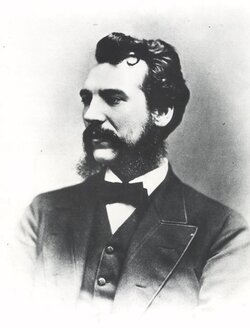
Alexander Graham Bell
Telephone inventor and patent holder
American Bell · Bell Canada · Bell Telephone · Charles Williams Jr. Shop | Associates: Alexander Melville Bell, Emile Berliner, Francis Blake, William Francis Channing, Gardiner Greene Hubbard, Mabel Gardiner Hubbard, Thomas S. Sanders, James J. Storrow, Theodore Vail, Thomas A. Watson, Charles Williams, Jr., Gertrude Mercer McCurdy, Thomas B. Doolittle

1876


Alexander Graham Bell ( ; born Alexander Bell; March 3, 1847 – August 2, 1922) was a Scottish-born Canadian-American inventor, scientist, and engineer who is credited with patenting the first practical telephone. He also co-founded the American Telephone and Telegraph Company (AT&T) in 1885.
Bell's father, grandfather, and brother had all been associated with work on elocution and speech, and both his mother and wife were deaf, profoundly influencing Bell's life's work. His research on hearing and speech further led him to experiment with hearing devices, which eventually culminated in his… More on Wikipedia →
Timeline events (28)


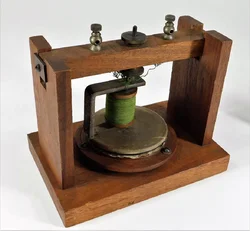

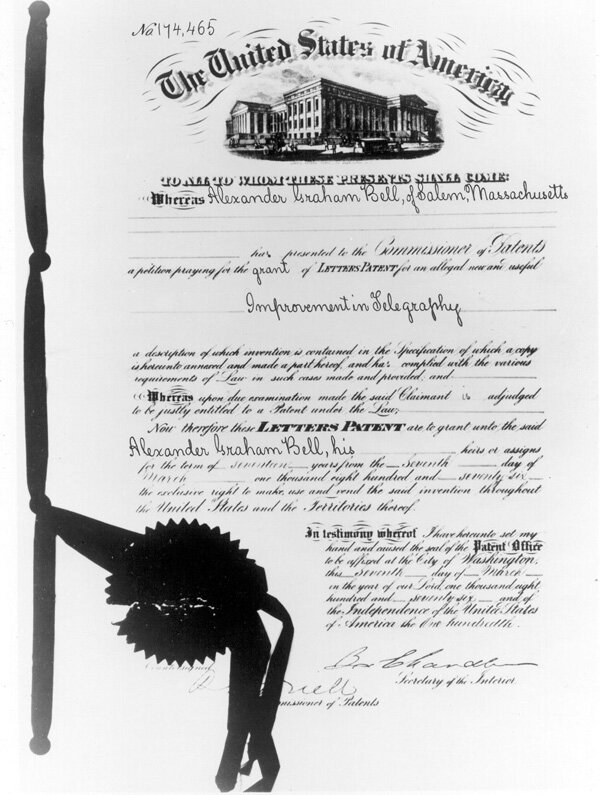
Bell Patent Association formed so Sanders and Hubbard can share in proceeds from Bell's patents




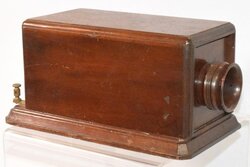


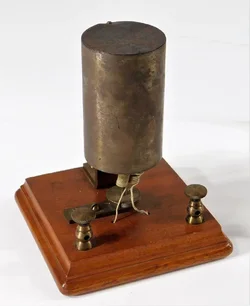
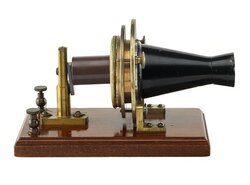
Phones (6)


PDFs (3)
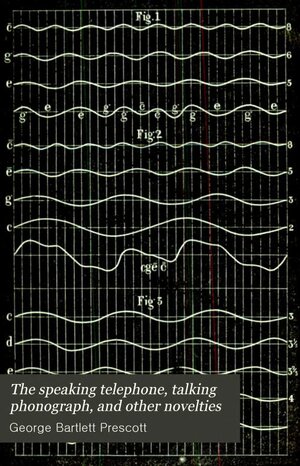
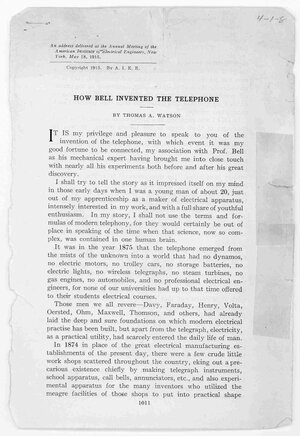
Related concepts (5)
Acoustic telegraphy
Acoustic telegraphy (also known as harmonic telegraphy) was a name for various methods of multiplexing (transmitting more than one) telegraph messages simultaneously over…
First transcontinental telephone call
A telephone call, which for marketing purposes is claimed to be the first transcontinental telephone call, occurred on January 25, 1915, a day timed to coincide with the…
Graphophone
The Graphophone was the name and trademark of an improved version of the phonograph. It was initially designed at the Volta Laboratory established by Alexander Graham Bel…
Photophone
The photophone is a telecommunications device that allows transmission of speech on a beam of light. It was invented jointly by Alexander Graham Bell and his assistant Ch…
Water microphone
A water microphone or water transmitter is based on Ohm's law that current in a wire varies inversely with the resistance of the circuit. The sound waves from a human voi…