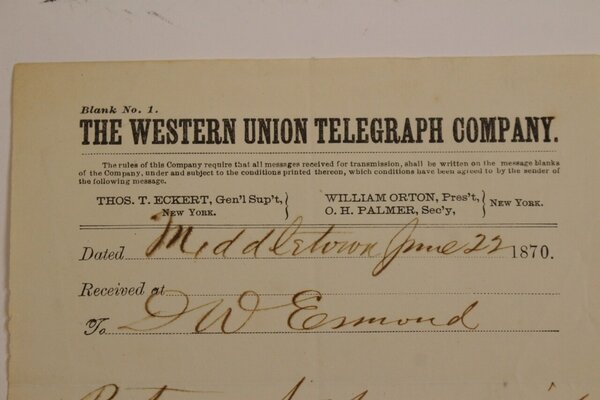
Western Union carries nine million messages and launches money orders
Western Union carries nine million messages and launches money orders
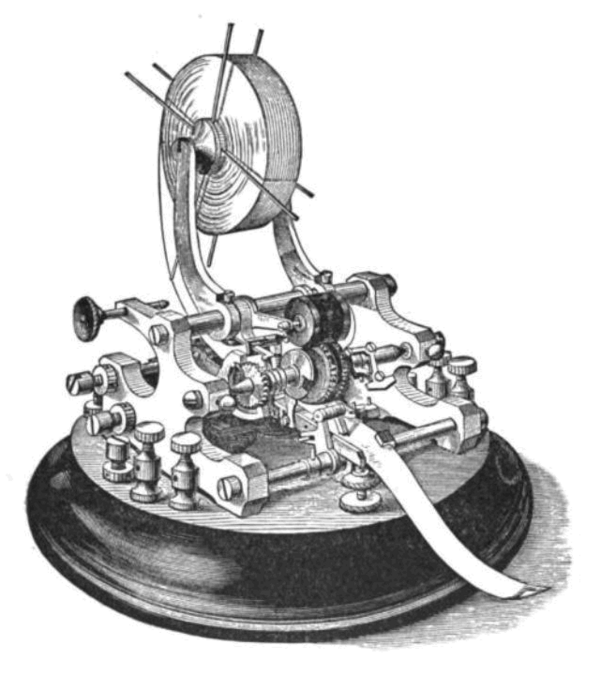
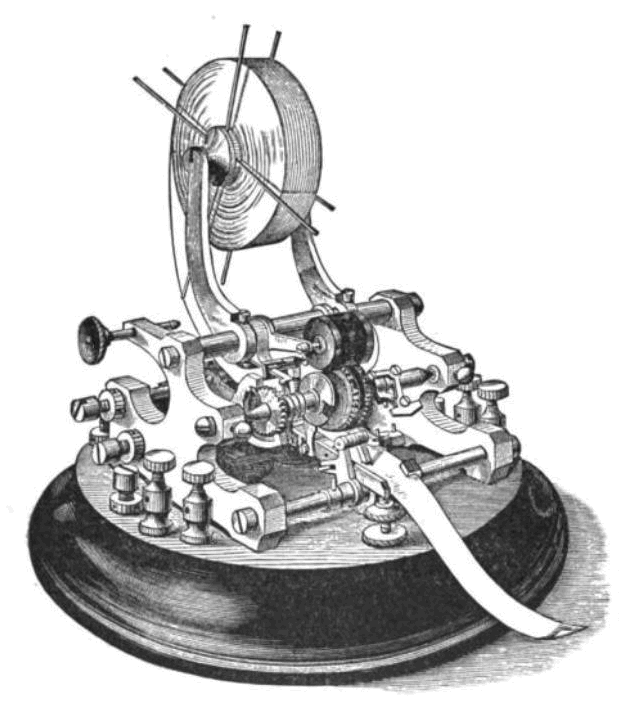
Edison telegraph stock ticker printer launches
Edison telegraph stock ticker printer launches
Bell meets leather merchant Thomas Sanders (who has a deaf son) becoming close friends
Bell meets leather merchant Thomas Sanders (who has a deaf son) becoming close friends
Meucci files caveat for talking telegraph
Meucci files caveat for talking telegraph
Bell meets Gardiner Hubbard at the Clarke Institution for the Deaf
Bell meets Gardiner Hubbard at the Clarke Institution for the Deaf
Gray and Barton incorporate Western Electric, with funding from Western Union
Gray and Barton incorporate Western Electric, with funding from Western Union
Bell moves to Boston to teach deaf students, and begins intense audio experimentation
Bell moves to Boston to teach deaf students, and begins intense audio experimentation
Thomas Watson starts work at Charles Williams Jr's. shop
Thomas Watson starts work at Charles Williams Jr's. shop
Western Union deploys the Stearns Duplex Telegraph
Western Union deploys the Stearns Duplex Telegraph
Western Union contracts with Thomas Edison and Elisha Gray to solve telegraph multiplexing
Western Union contracts with Thomas Edison and Elisha Gray to solve telegraph multiplexing
Elisha Gray demonstrates his 'harmonic telegraph' to Western Union
Elisha Gray demonstrates his 'harmonic telegraph' to Western Union
Western Union's Orton testifies in Congress against Hubbard's proposed telegraph competitor
Western Union's Orton testifies in Congress against Hubbard's proposed telegraph competitor
Vacationing in Canada, Bell conceives how speech could be sent over telegraph wires
Vacationing in Canada, Bell conceives how speech could be sent over telegraph wires
Bell reveals his harmonic telegraph work to Hubbard and Sanders, who agree to fund his efforts
Bell reveals his harmonic telegraph work to Hubbard and Sanders, who agree to fund his efforts
Bell and Watson start working together at Williams' shop
Bell and Watson start working together at Williams' shop
Edison develops the quadruplex multiplexing telegraph
Edison develops the quadruplex multiplexing telegraph
Elisha Gray leaves Western Electric to pursue other inventions
Elisha Gray leaves Western Electric to pursue other inventions
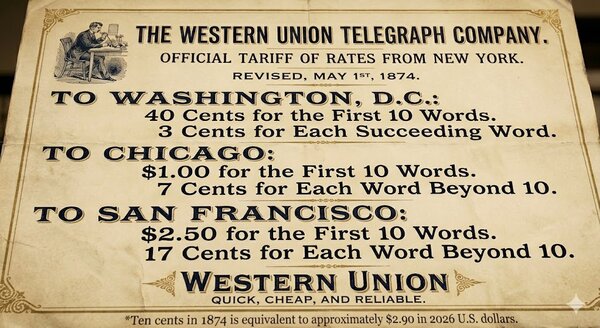
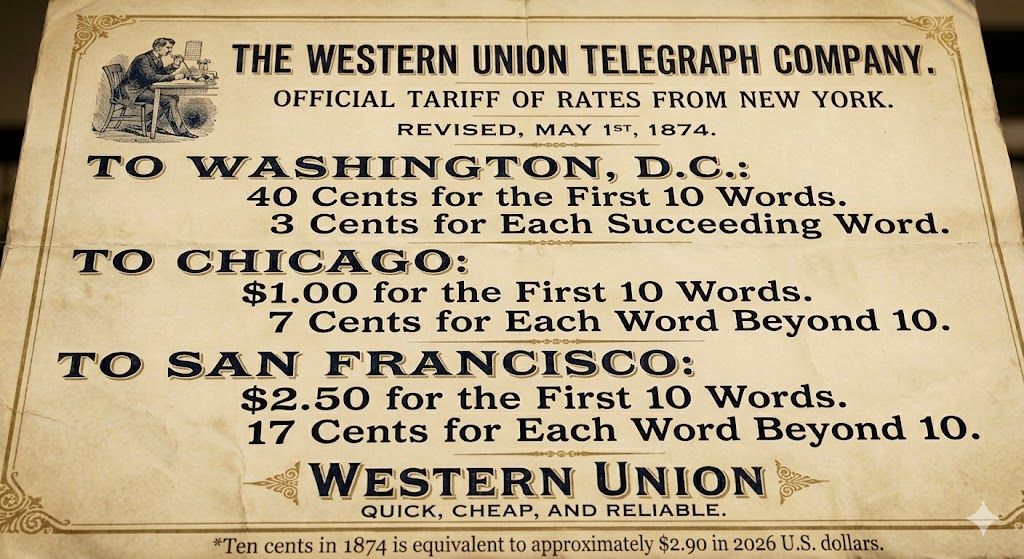
Western Union rates range from four to 25 cents per word based on distance
Western Union rates range from four to 25 cents per word based on distance
Bell Patent Association formed so Sanders and Hubbard can share in proceeds from Bell's patents
Bell Patent Association formed so Sanders and Hubbard can share in proceeds from Bell's patents
Bell pitches his harmonic telegraph to Western Union's Orton, who declines
Bell pitches his harmonic telegraph to Western Union's Orton, who declines
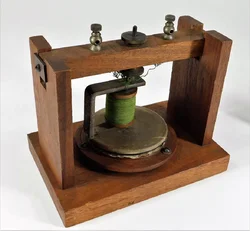
Bell uses a bi-directional "gallows" telephone to transmit "voice-like sounds"
Bell uses a bi-directional "gallows" telephone to transmit "voice-like sounds"
Orton engages Thomas Edison to investigate harmonic telegraphy for Western Union
Orton engages Thomas Edison to investigate harmonic telegraphy for Western Union
Bell completes the specifications for his telephone patent application
Bell completes the specifications for his telephone patent application
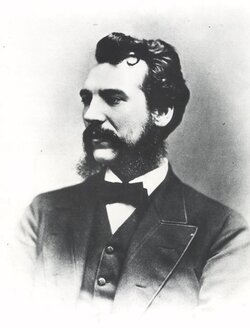
Alexander Graham Bell realizes sound can be transmitted as a continuous electrical wave.
Alexander Graham Bell realizes sound can be transmitted as a continuous electrical wave.
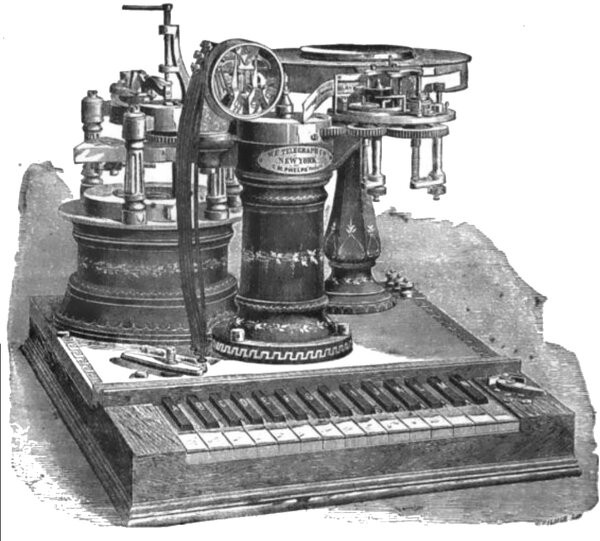
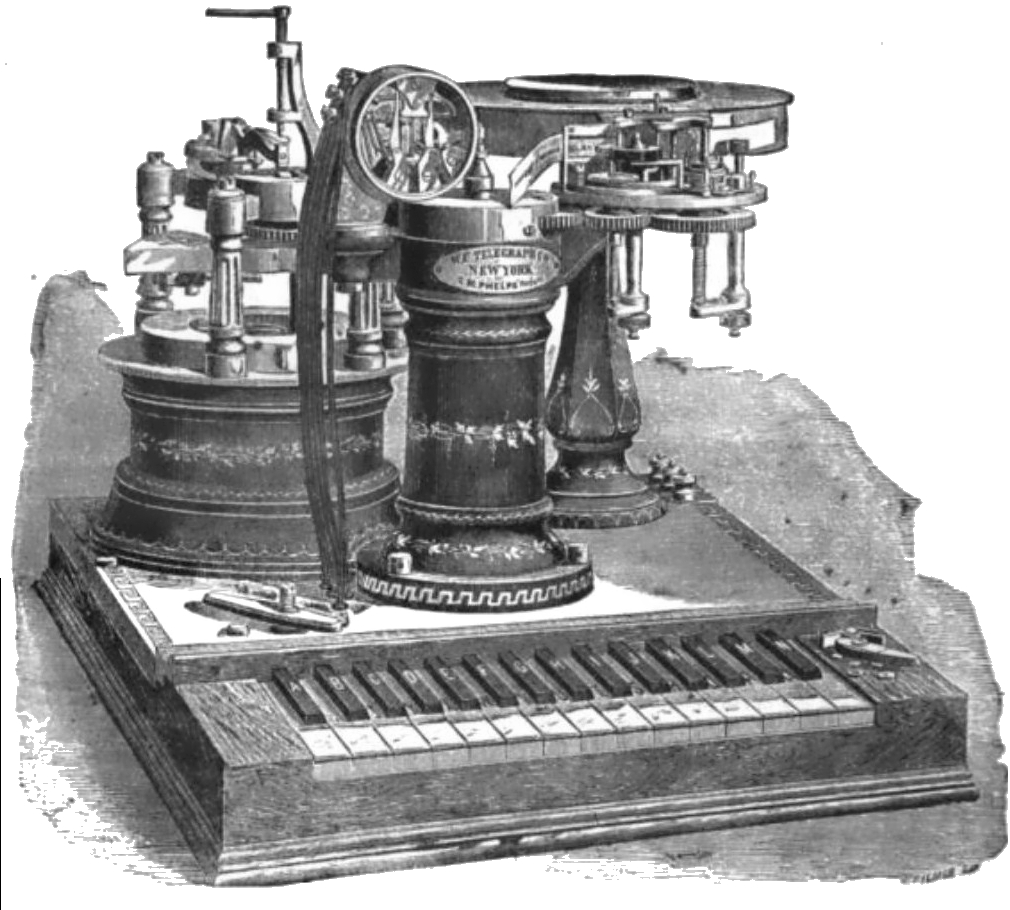
Phelps' "Electro-Motor Printing Telegraph" enables 60 WPM speed
Phelps' "Electro-Motor Printing Telegraph" enables 60 WPM speed
Feb 14, 11:30am: Alexander Graham Bell's lawyer files his telephone patent
Feb 14, 11:30am: Alexander Graham Bell's lawyer files his telephone patent
Feb 14: Elisha Gray files telephone caveat
Feb 14: Elisha Gray files telephone caveat
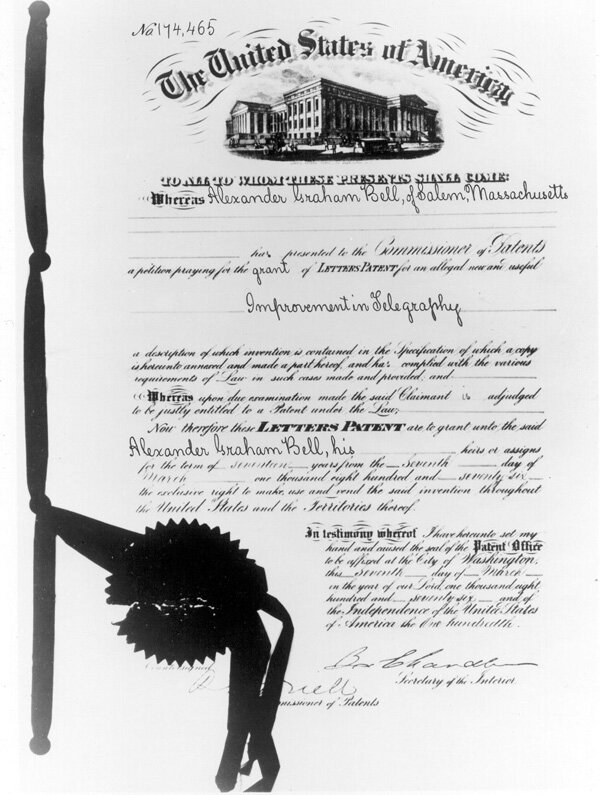
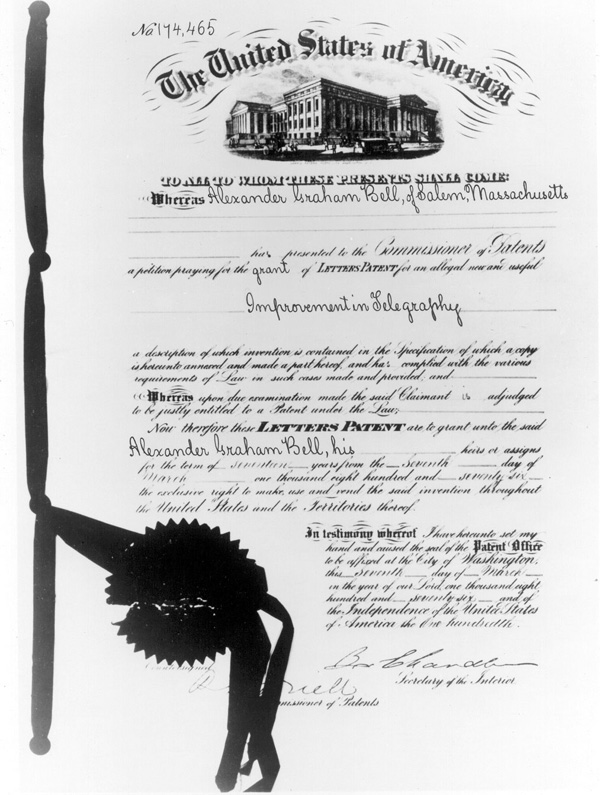
Patent #174,465 for the telephone is issued to Bell
Patent #174,465 for the telephone is issued to Bell
Western Union begins paying Edison to develop a 'speaking telegraph"
Western Union begins paying Edison to develop a 'speaking telegraph"
Western Union's Orton declines to buy Bell's patent for $100k
Western Union's Orton declines to buy Bell's patent for $100k
Mabel insists Bell go to the Philadelphia Centennial Exhibit, where his phone is a huge hit
Mabel insists Bell go to the Philadelphia Centennial Exhibit, where his phone is a huge hit
Lars Magnus Ericsson founds Ericsson as a mechanical engineering shop
Lars Magnus Ericsson founds Ericsson as a mechanical engineering shop
First public exhibition of the telephone, in Salem, Mass.
First public exhibition of the telephone, in Salem, Mass.
Sold-out Salem phone exhibition with two-way speech to/from Boston
Sold-out Salem phone exhibition with two-way speech to/from Boston
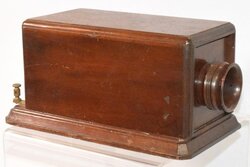
Bell's box phone goes into service
Bell's box phone goes into service
Brown profs swap bar magnet for Bell's horseshoe magnet, enabling butterstamp telephones
Brown profs swap bar magnet for Bell's horseshoe magnet, enabling butterstamp telephones
First telephone line completed, between Charles Williams Jr's home and office
First telephone line completed, between Charles Williams Jr's home and office
Thomas Edison patents his carbon button transmitter
Thomas Edison patents his carbon button transmitter
Berliner files caveat for improved telephone transmitter
Berliner files caveat for improved telephone transmitter
Bell and Gower exhibit the telephone in Lawrence, Mass.
Bell and Gower exhibit the telephone in Lawrence, Mass.
Bell marries Mabel Gardiner Hubbard
Bell marries Mabel Gardiner Hubbard
Bell patents transfers 75% of his Canadian patent rights to his father
Bell patents transfers 75% of his Canadian patent rights to his father
Scientific American write-up of Bell's hand telephones
Scientific American write-up of Bell's hand telephones
Western Union creates the American Speaking Telephone Co.
Western Union creates the American Speaking Telephone Co.
Doolittle invents hard drawn copper wire
Doolittle invents hard drawn copper wire
Holmes Burglar Alarm of Boston installs first telephone exchange
Holmes Burglar Alarm of Boston installs first telephone exchange
Berliner joins Bell Telephone
Berliner joins Bell Telephone
Doolittle files patent for 'direct-connecting' switchboard
Doolittle files patent for 'direct-connecting' switchboard
Puskás designs first telephone exchange
Puskás designs first telephone exchange
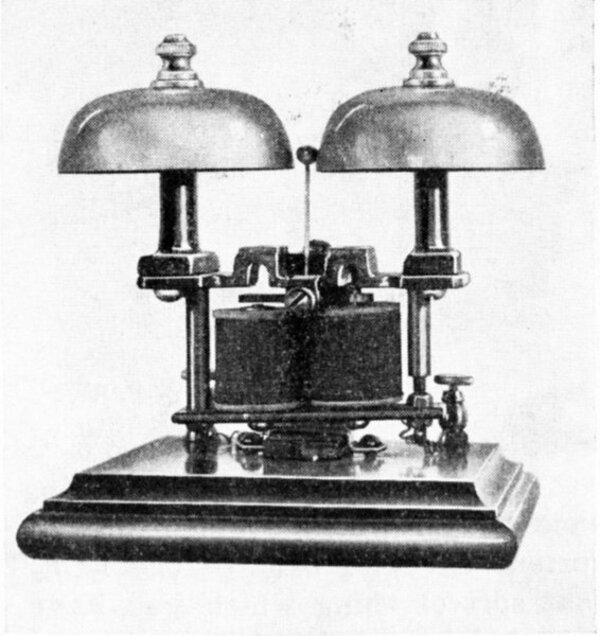
Watson invents a ringer that 'thumps'
Watson invents a ringer that 'thumps'
Coy opens the first telephone exchange (in New Haven)
Coy opens the first telephone exchange (in New Haven)
New England Telephone formed as first Bell local operating company
New England Telephone formed as first Bell local operating company
Japan reproduces Bell telephones
Japan reproduces Bell telephones
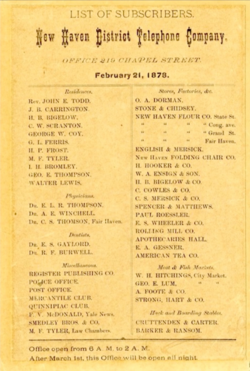
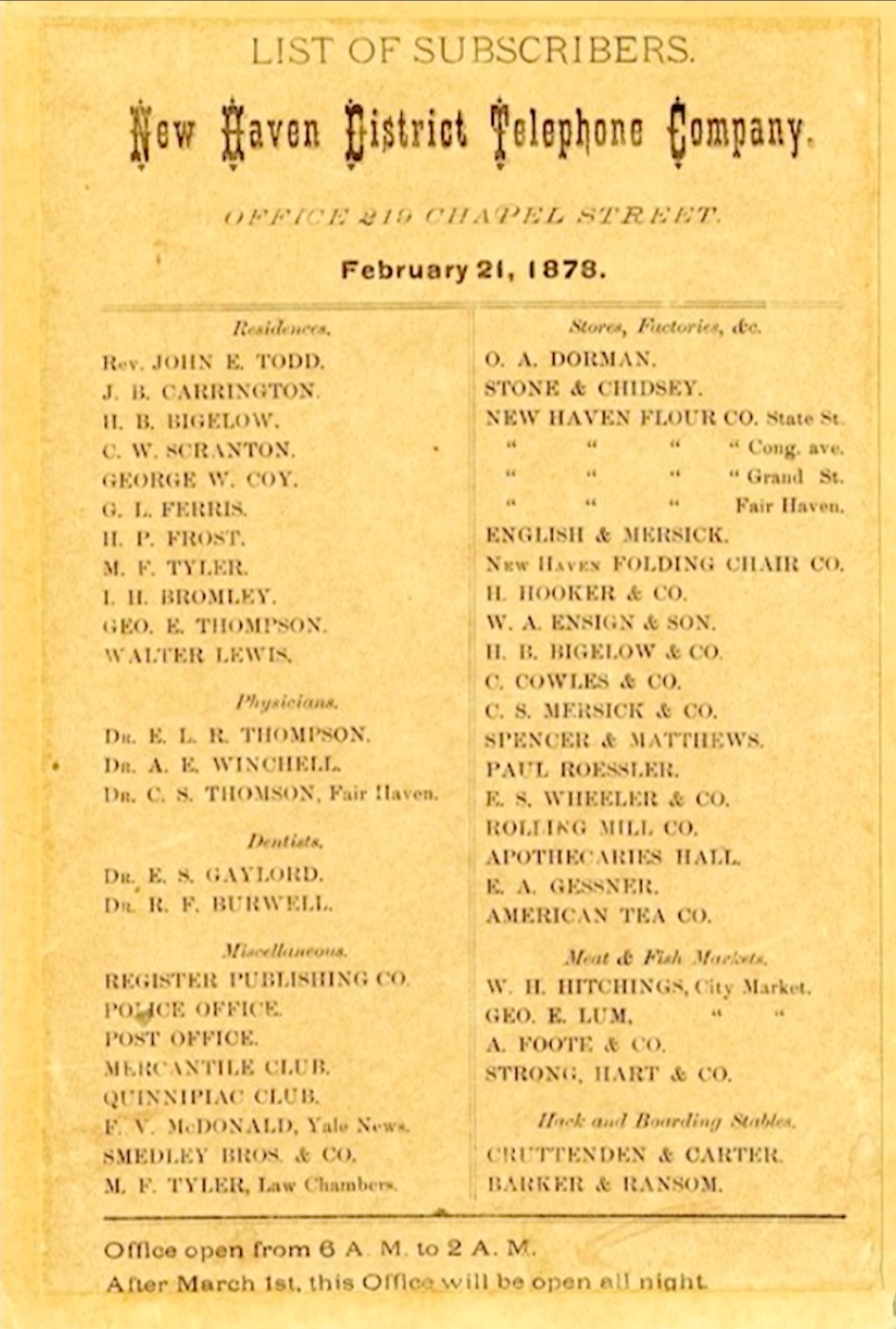
First telephone directory published
First telephone directory published
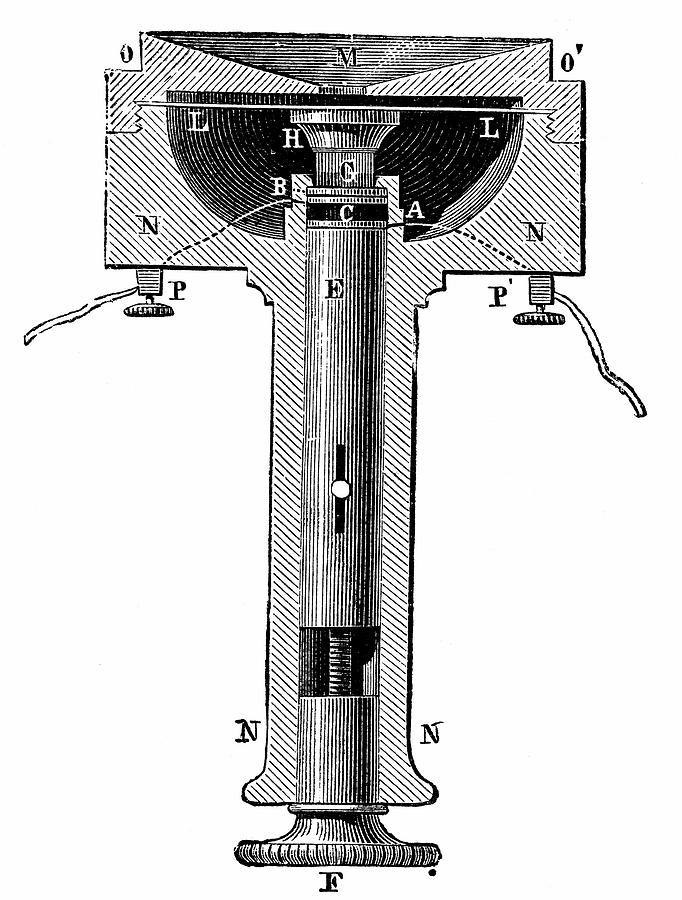
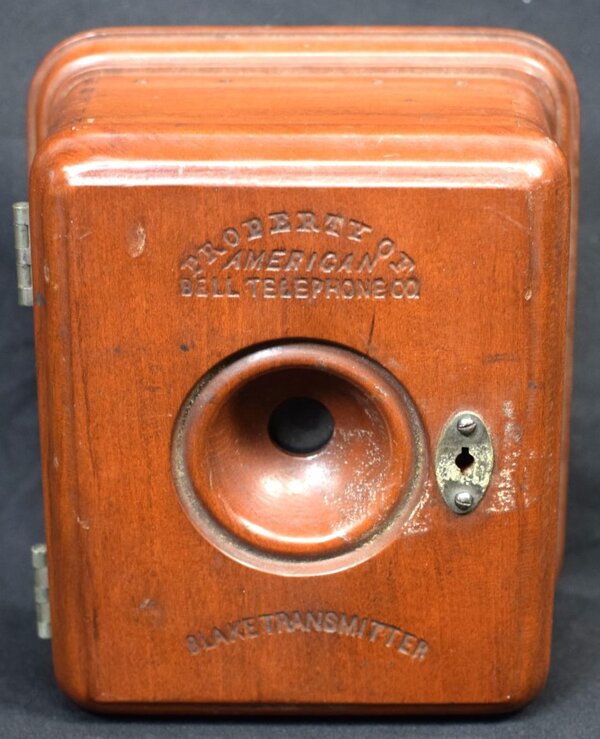
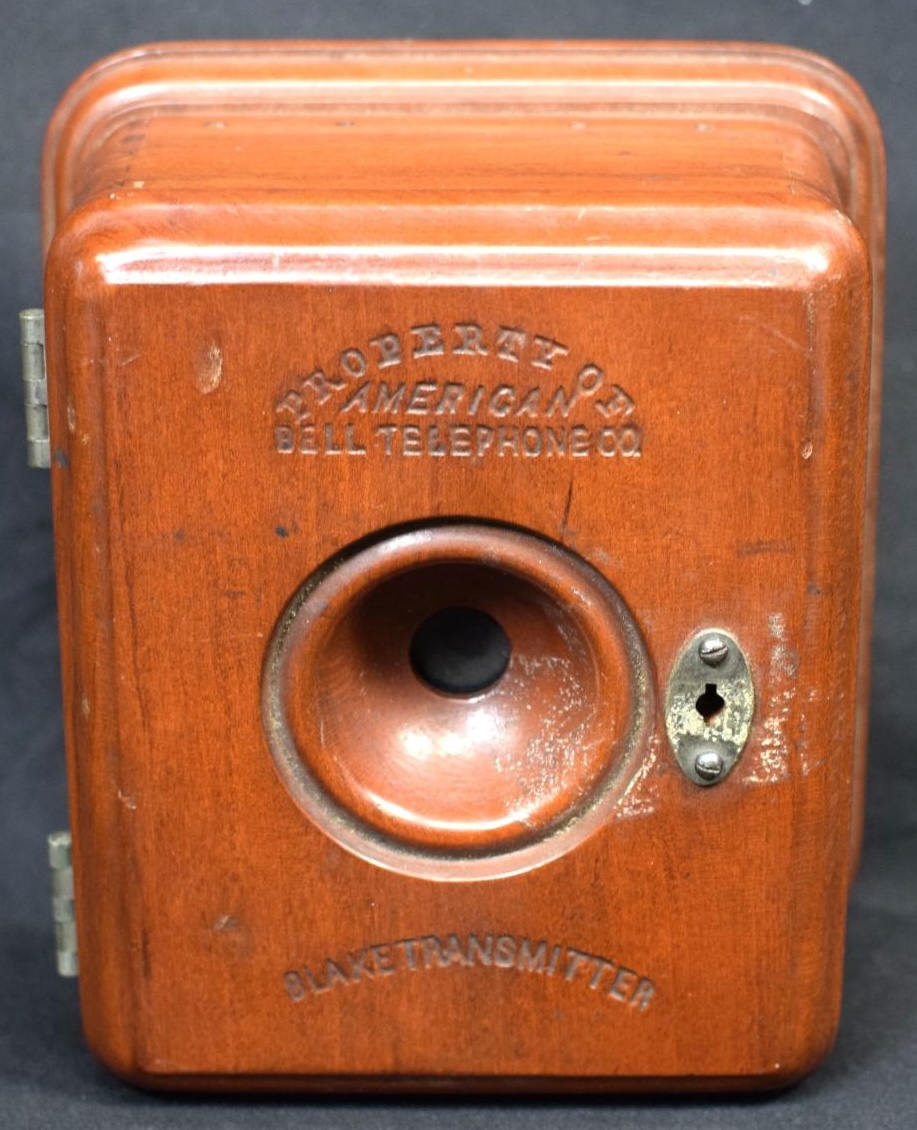
Blake invents and patents his carbon microphone transmitter
Blake invents and patents his carbon microphone transmitter
Watson invents a ringer that rings
Watson invents a ringer that rings
Hilda Simonsson marries Lars Ericsson, and helps run the business
Hilda Simonsson marries Lars Ericsson, and helps run the business
Theodore Vail joins Bell as General Manager
Theodore Vail joins Bell as General Manager
Bell sues Western Union for patent infringement
Bell sues Western Union for patent infringement
Emma Nutt becomes first female telephone operator
Emma Nutt becomes first female telephone operator
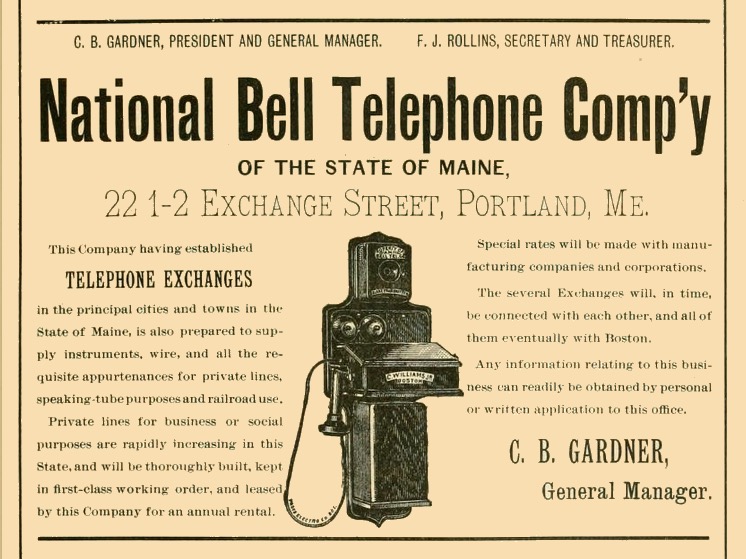
Bell and New England Telephone merge to become National Bell Telephone
Bell and New England Telephone merge to become National Bell Telephone
Bell wins its patent lawsuit against Western Union
Bell wins its patent lawsuit against Western Union
French Postes & Telegraphs founded
French Postes & Telegraphs founded
Western Union sells its phone network to Bell
Western Union sells its phone network to Bell
Bell acquires Edison's carbon microphone patents from Western Union
Bell acquires Edison's carbon microphone patents from Western Union
Blake and his transmitter join Bell Telephone
Blake and his transmitter join Bell Telephone
Edison establishes Edison Telephone of London to compete with Bell
Edison establishes Edison Telephone of London to compete with Bell
Parker proposes using numbers instead of names for telephone subscribers
Parker proposes using numbers instead of names for telephone subscribers







 +1
+1